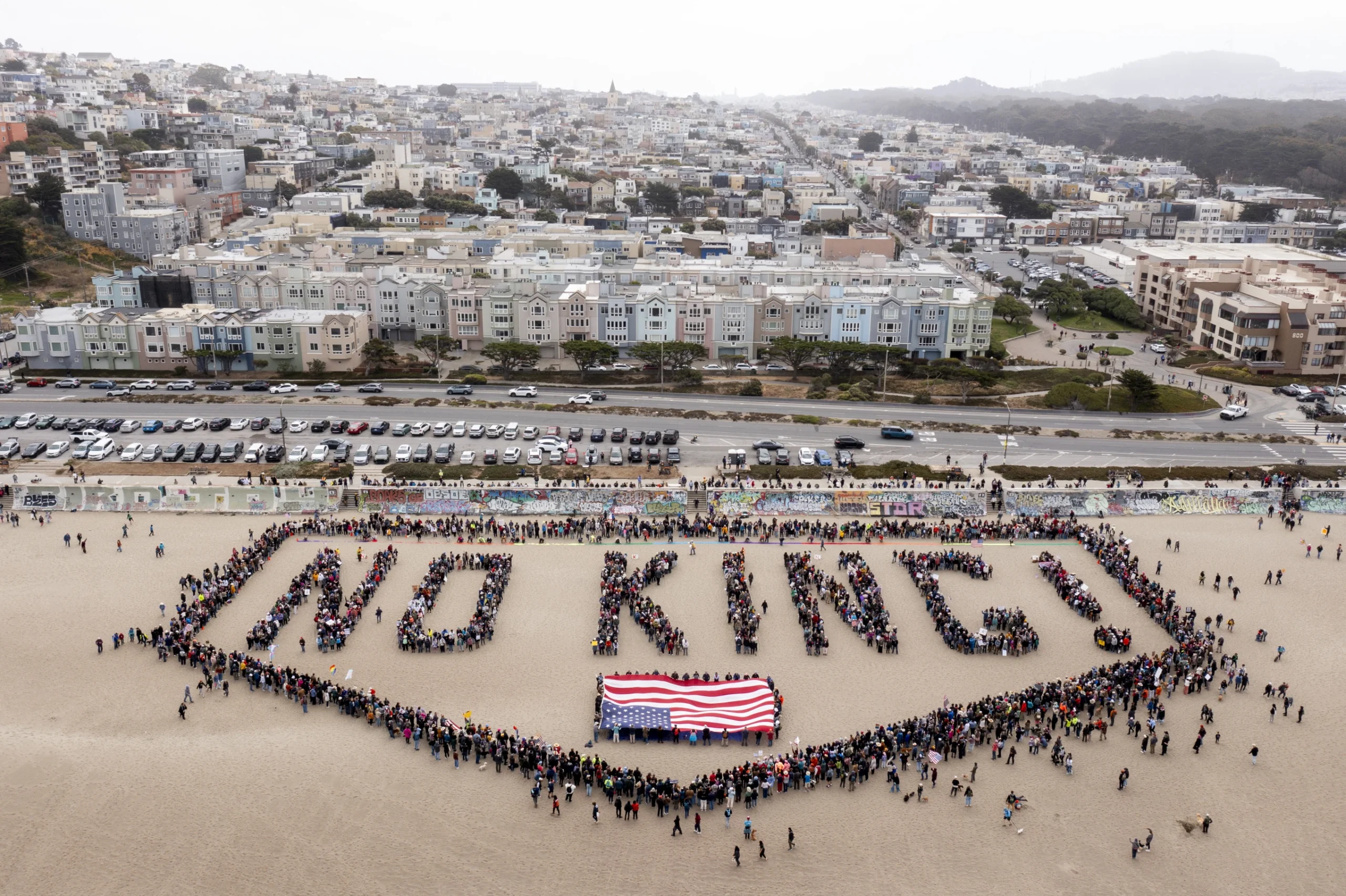
The administration and its allies have been in a media frenzy trying to denigrate the protestors of Saturday’s No Kings national protest as people who “hate America.” They’ve asserted that would-be protestors are terrorists, criminals, and un-American. Trump and government actors have claimed that protestors against Trump are paid. What does the time and effort spent trying to label members of the opposition reveal? It shows that protestors have power. You and the millions of people opposing Trump and his allies have the power to make them resist you.
What is Power?
So, let’s talk about power. Power is the capacity to influence outcomes. Capacity implies that power is a potential or ability that can be held in reserve and does not need to be actively used to exist. Influence covers a wide spectrum of actions, from direct force and coercion to subtle persuasion and shaping opinions. Outcomes refers to a wide range of results, such as the behavior of people, the course of events, or the achievement of a goal. This includes both “power over” others and the “power to” achieve something.
Protest as an Act of Power-Accumulation
When you protest, you achieve something; you increase your personal power. Protesting enhances one’s power by increasing their capacity to influence the thoughts and actions of others, thereby affecting outcomes. If a protestor provokes a thought in an observer that leads to an action or outcome that would not have otherwise occurred, the protestor’s power has increased. Conversely, choosing not to protest is a choice of passivity that prevents this increase in influence. The act of putting one’s body and thoughts into the world is the mechanism for building this type of power.
Because protesting increases your personal power, it is also an act of resistance against authoritarianism. In a time of political oppression, protesting to make sure that others see and hear you is an active form of resistance against authoritarian forces that demand passivity and silence.
Authoritarian regimes seek to maintain control by persuading citizens to be passive and silent. Protesting openly and with a group of fellow dissenters is a direct refusal to be silent; it is an act of being active and “loud.” This act of expression serves as a form of resistance and a method for increasing one’s power when it is being actively suppressed.
Protesting doesn’t just matter only for right now; it matters for the future. Protesting creates a historical act for the future. Even if not immediately impactful, protesting creates a lasting historical act that can empower future generations fighting for justice. The influence of a protestor’s actions may not be immediately realized to its full potential in the present. Protests, especially large-scale protests, become part of the historical record, preserving voices, perspectives, and courage for posterity.
The recorded protest of the past provides insight into the experiences of the people of its time. This insight and record can serve as a tool for future humans who seek justice and a more equal world. For example, look at how we look upon historical protest acts such as those of the civil rights movement, women’s suffrage, labor unions, and more, such as the Salt March led by Gandhi. A voice from the present can lend power and inspiration to the people of the future.
The Zero-Sum Game: Taking Power Back
The act of protest is political. It’s a crucial act that affects the balance of power between a government and its people. Political power is of a finite quantity, which means that a gain of power by one entity or individual necessitates a corresponding loss of power by another; it’s a zero-sum resource.
Political power should not be seen as an infinite resource that can be endlessly created. It operates within a closed system where power is distributed, not generated from nothing. Therefore, when one person or institution accumulates more power, it is necessarily taken away from another part of the system. This zero-sum dynamic is crucial for understanding shifts in political landscapes, such as the balance ongoing between different branches of government.
It’s crucial that you use your body and voice to protest against the immensely growing executive power in the United States. Growing executive power diminishes representative democracy. As the executive branch, the office of the President of the United States, accumulates power beyond its traditional and constitutional limits, it erodes the power of representative bodies like Congress and, consequently, the power of the citizens whom they represent.
When an executive office acts in ways previously considered unlawful, it directly appropriates power from other governmental bodies. Specifically, an increase in presidential and executive agency power corresponds to a decrease in congressional power. Since Congress is the body that represents the people, a less powerful Congress results in a less powerful and less represented citizenry. This concentration of power enables the executive to selectively disburse power to allies, supporters, and lobbyists, further disenfranchising the general population.
Your acts of protest are necessary to take power away from the executive and return it to yourself. Executive power growth creates a self-reinforcing cycle of democratic erosion. The expansion of executive authority at the expense of representative democracy creates a dangerous feedback loop where the executive can then use its increased power to dismantle the very checks and balances, such as freedom of assembly, that would normally constrain it.
As executive power grows, the strength of representative democracy diminishes. This power imbalance allows the executive to take actions that further harm the democracy, such as targeting political opposition. The executive can use law enforcement and intimidation to suppress constitutionally protected acts like freedom of speech and assembly. The weakening of these democratic rights allows the executive to consolidate its power further, creating a cycle of escalating authoritarianism.
Influencing a Reaction is the Point
We should not be passive and aid in the growth of authoritarianism. Citizen silence cedes power to the state. When individuals choose not to speak out against government overreach, they voluntarily give up their own power, which is then absorbed by the state, increasing the power imbalance.
Choosing not to speak on issues the government wants silenced is a choice not to utilize one’s own power. This abdication of personal power allows the government and its actors to accumulate more power for themselves. As this power imbalance grows, it becomes progressively more difficult for citizens to challenge or influence the dynamics of power. The reduction of citizen power through silence is a strategic goal for state actors seeking to empower themselves further.
Taking away your voice, your right to freedom of speech, is the goal for these actors to further empower themselves. The erosion of rights is an incremental process. The infringement of civil liberties is a progressive process where each right that is taken away makes it easier for state actors to erode subsequent rights in the future.
There is a “slippery slope” dynamic. As they erode further rights, it becomes easier for them to come after you. The initial suppression of speech rights, such as those against non-citizens, weakens the overall foundation of liberty. This weakening makes future infringements, potentially against a broader population, easier to implement.
Recognizing that power is contextual is essential for understanding how to affect this power dynamic. The ability to wield power is not absolute but is dependent on the specific context of a situation, meaning a generally powerful entity can be nearly powerless in a particular circumstance. Donald Trump and his allies have little power to prevent you from protesting right now.
An entity may possess significant power in sum but lack the capacity to influence outcomes in a specific, relative context. The protest scenario illustrates this: the state can not achieve its desired outcome if the citizens successfully exercise their power to resist. The executive’s power is rendered ineffective within the specific context of preventing the act of protest by a defiant person. Therefore, possessing “more power” in a general sense does not guarantee the “power to” influence every outcome as desired, as the situation determines power’s effectiveness.
Since we’ve established that your act of protest is an act of power that increases your power, it means that preceding and subsequent actions by Trump and his allies are an act of resistance against you. You can make a tyrant resist you.
This is because resistance is an intentional act in response to power. It’s a deliberate act, distinct from the passive capacity of power, that actively responds to another’s exercise of power in order to alter an outcome. The resistive act influences an outcome. An act of power becomes an act of resistance when it responds to another’s act. Resistance is an act of intent that responds to an act of power in order to alter the balance of power. Every action is a reaction by Trump and his allies to your power. It is resistance to resistance.
Our Power
Protest derives power by forcing a response from authority. The act of protest demonstrates power by compelling those in authority to react and resist, thereby altering the political balance. When agents of the government invest significant time and resources to denigrate and label protestors, it signals that the protest is influential.
This strong, adverse reaction by the government is not a sign of the protestors’ weakness; it’s direct evidence of their power. The core power of a protest lies in its ability to force a response from authority, making the authority acknowledge and actively resist the opposition. This dynamic shows that protestors possess the power to alter the political landscape and make Trump and his allies react to them.
You and I have the power to make Trump and his allies respond to us. You and I have the power to alter the balance of power and make them try to do the same. Our act of protest will do such because we possess the power to protest. You and I can make a tyrant and his sycophants call us terrorists, criminals, un-American, and more. They will do this because they have to respond to our power; they have to resist us. On No Kings Day, will we use our power to make them resist us?